


FOR REFERRING PRACTITIONERS
Jayden Simpson · Ezekiel Eyes
Complex contact lens fitting.
Collaborative care.
I welcome referrals from optometrists, ophthalmologists and other healthcare professionals for patients who may benefit from specialty contact lens assessment and fitting.
How to refer
Please address referrals to Jayden Simpson at Ezekiel Eyes. Contact the practice team if you need guidance on sending clinical information or arranging an assessment.
Ezekiel Eyes
69 Hampden Road, Nedlands WA 6009
Email: info@ezekieleyes.com
Telephone: (08) 9386 3620
Helpful information to include
Where available, please include:
- The reason for referral and the patient’s visual goals.
- Relevant ocular diagnoses, surgery and treatment history.
- Recent refraction and best-corrected visual acuity.
- Previous contact lens designs, experience and difficulties.
- Relevant corneal imaging or other supporting reports.
- Patient contact details and the referring practitioner’s details.
Please send patient details and clinical documents through the practice’s established referral arrangements, rather than this website’s general enquiry form.
What to expect following a referral
Following referral, I assess whether specialty contact lenses are appropriate and, where indicated, manage lens selection, fitting adjustments and follow-up. Complex fittings may require several appointments.
I aim to keep referring practitioners informed of relevant clinical findings, fitting progress and management recommendations. My role is to provide focused specialty contact lens care while respecting established patient–practitioner relationships and supporting continuity of care.
Common referral indications
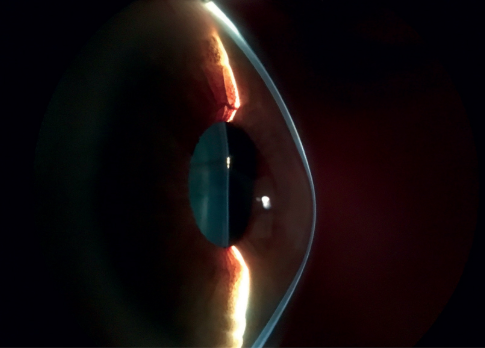
- Keratoconus and corneal ectasia.
- Irregular corneal astigmatism and scarring.
- Irregular corneas following corneal transplantation.
- Irregular corneas following refractive surgery.
- Selected cases of severe dry eye and ocular surface disease.
- Inadequate vision or intolerance with conventional contact lenses.
- Complex prescriptions and occlusive or prosthetic lens needs.
Would you like to discuss an approach?
For a general professional discussion, use the enquiry form without including patient-identifying information. Formal patient referrals should be directed to Ezekiel Eyes.
Discuss a case